
*ALLEGED* ORGAN HARVESTING GONE WRONG: Straight Out of a Biotech Thriller Movie!…YOU CAN'T MAKE THIS STUFF UP: N.J Organ‑Donation Group Under Fire:
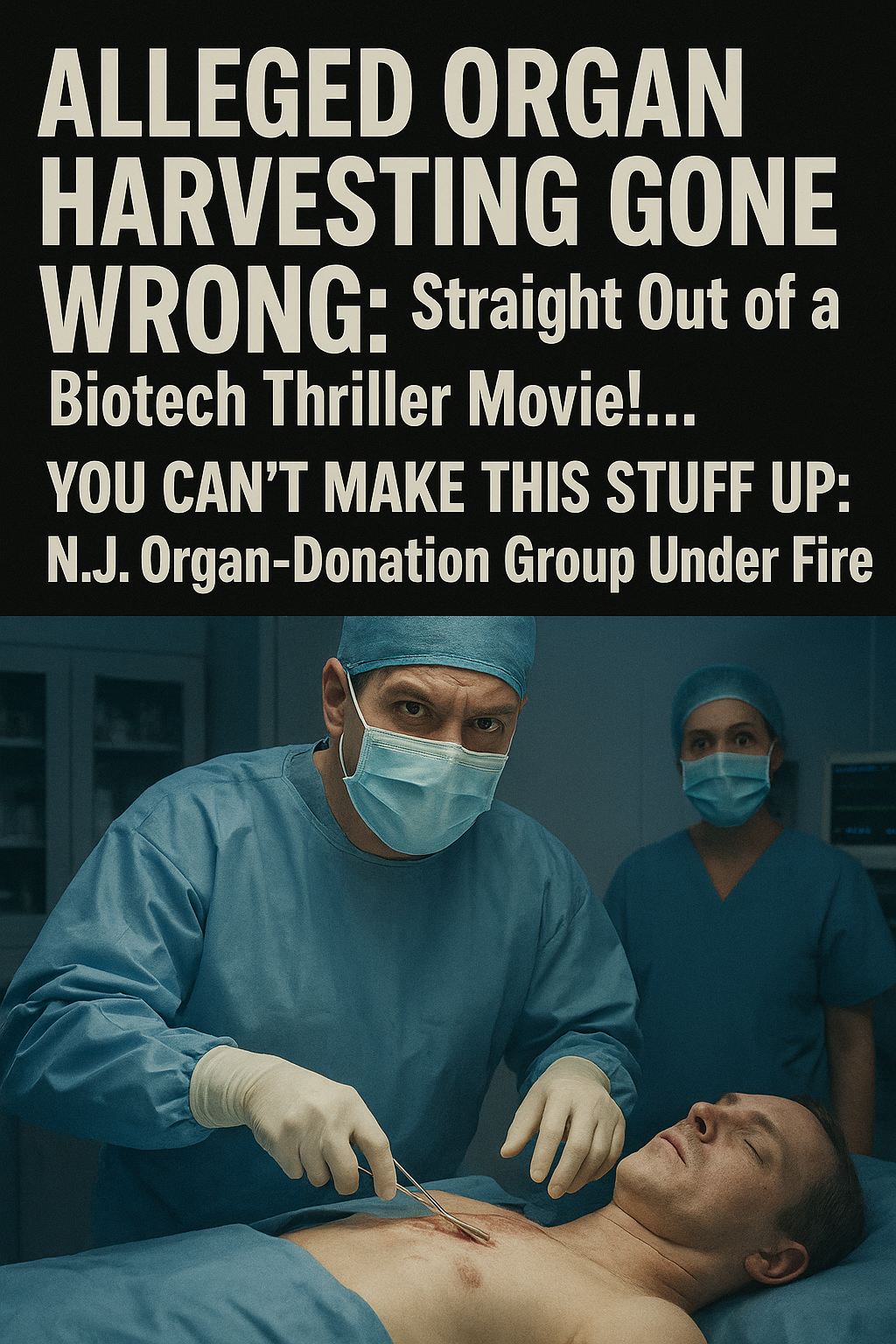
In what feels like something ripped from the pages of a biotech horror novel, a key U.S. organ‑donation organization is now under federal investigation. The scene: hospitals, lifeless patients, and a wave of alarming internal allegations coupled with congressional scrutiny.
The organization in question — New Jersey Organ and Tissue Sharing Network (NJOTSN) — is facing an investigation by the U.S. House Committee on Ways and Means, which accuses it of directing staff to continue organ‑retrieval procedures from a patient who unexpectedly showed signs of life.
According to whistleblower testimony relayed in a letter to NJOTSN’s CEO Carolyn Welsh, hospital staff at Virtua Our Lady of Lourdes Hospital in Camden, New Jersey, intervened when the donor, previously declared dead, began showing biological signs of life as an organ‑retrieval process was underway. The letter alleges Welsh instructed the team to press ahead anyway.
The accusations don’t stop there. The committee’s letter claims the organization:
- Pressured grieving families into organ‑donation decisions under questionable circumstances.
- Bypassed the national transplant waitlist to allocate organs.
- Discarded large numbers of pancreases in a single day despite securing them for “research use.”
In short: the storyline sounds straight out of a medical thriller, but the allegations are very much real. The committee has demanded answers by early December 2025, requiring NJOTSN to hand over internal documents and make personnel available for interviews.
NJOTSN and its CEO, Carolyn Welsh, did not respond to requests for comment when the letter was published. The broader organ‑procurement system is also coming under increased oversight — Congress and regulatory bodies are raising alarms about how some of these nonprofit organizations operate.
Why It Matters
Organ donation and transplantation remain among medicine’s greatest triumphs — saving tens of thousands of lives per year. But the system’s integrity depends on absolute trust: that donors are truly deceased, that families give fully informed consent, and that distribution is fair. Once that trust frays, the implications are enormous.
If the allegations hold up, they don’t just raise individual misconduct — they suggest systemic risk in how organ‑donation entities are managed and monitored. Because while thrillers are fictional, human lives and final moments in hospital beds are not.
The Takeaway for You
- Donors and their families deserve transparency and protection.
- Non‑profits entrusted with organ procurement must be held to rigorous standards.
- The system’s dependability matters not only medically, but ethically and socially.
This investigation is still evolving, and the final outcome is far from certain. But one fact is already clear: a plotline more Hollywood than hospital is playing out in real life — and we’re all watching.
Member discussion