
Documents Reveal Montgomery Says It Can Extend Affordable Housing Controls Without Homeowner Consent
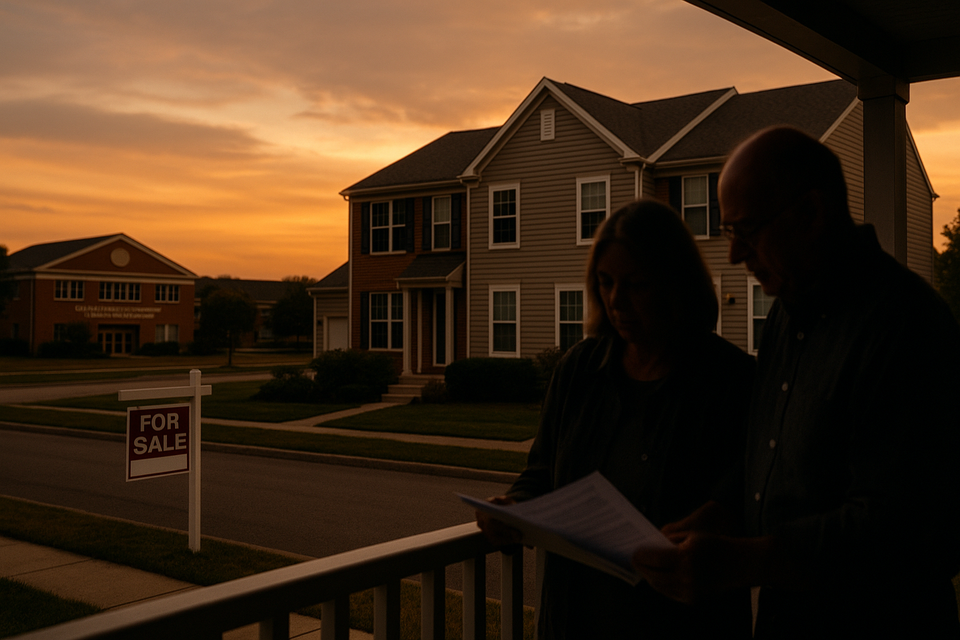
Township email tells 30-year homeowners the deed limits will “extend automatically” even if they refuse a $10,000 payment
MONTGOMERY TOWNSHIP, NJ – New documents obtained by The Garden State Gazette show Montgomery officials telling long-time affordable housing owners that their 30-year deed restrictions will be extended whether they agree or not.
In a November 20 email sent to homeowners and shared with The Garden State Gazette, Township Administrator and Planning Director Lori Savron lays out a Q&A following a recent information session on the town’s affordable housing changes.
One key answer is blunt: residents don’t have to take the $10,000 being offered by the township – but the affordability controls will still be extended.
“You do not have to accept the $10,000 payment,” the email states, before adding that the controls “will be extended automatically” and the $10,000 “would be made to the next homeowner” instead.
For many owners who bought in with a clear 30-year horizon, the message lands like a second mortgage: whether or not they sign, they’re being told the clock on their restriction resets.
Township says paperwork already gave them the power
In response to the question, “Where does it say in my deed that the unit is subject to an extension of the affordability control period by the Township?” the email cites two older documents:
The Deed – with the relevant language highlighted in Article 6 of a sample deed titled “Deed with Highlighted Language.”
The Affordable Housing Agreement – attached as a PDF labeled “Porcello and Mtg Housing 10-08-02.”
Homeowners are told to pull their original deed and affordable housing agreement from the county records or ask a township staffer to help them obtain copies.
In other words: the township’s position is that the right to extend was always baked into the fine print.
Backed by new statewide rules
The email also links to a 192-page statewide rulebook – the New Jersey Uniform Housing Affordability Controls (UHAC) amendments, adopted December 19, 2024.
Residents are told to read pages 101–102, which include section 5:80-26.26, “Municipal rejection of repayment option on 95/5 units.” That section is part of a broader overhaul that:
Updates how long affordable units must stay restricted
Allows municipalities to extend affordability controls on ownership units, especially older “95/5” units that got credit under earlier housing plans
Spells out how towns can contribute local trust fund dollars to keep those units restricted longer
Montgomery is now pointing to those changes – combined with its original deed and agreement language – as the legal basis for turning 30-year promises into much longer restrictions.
“Extension does not require your consent”
One of the clearest flashpoints in the email is the answer to a question about deadlines:
Homeowners ask whether the township will extend the decision timeline. The written response says the extension of affordable controls “does not require your consent.” The Property Owners Consent to Extend Affordable Controls form, they say, is only needed to trigger the $10,000 payment.
Yet the same email lays out a set of “Action Items” with firm dates:
By November 21 – make contact with the Township
By Tuesday, December 2 –
Provide proof of residency
Complete and return the consent form
Schedule an inspection of the unit
A second “listening session” is offered at the municipal building for anyone who still has questions.
For some homeowners, the message feels less like a listening session and more like a notice of terms: the controls are extending; sign here if you want the cash.
“Other towns are doing it too”
Montgomery also leans on regional practice.
In response to a question about what other towns are doing, the email says the municipalities they surveyed have extended their controls by resolution. Some offered payments; in projects that are older or structured differently, no payments were made at all.
That line raises a bigger fear among advocates: if one town can re-interpret “30 years” into “automatic extension,” and point to new regulations and resolutions as cover, how long before other towns follow?
Unanswered money questions
The township acknowledges it is still researching whether the $10,000 is taxable income. Officials say they will provide updated information once they have it.
They do state that the payment does not affect SNAP or LIHEAP, based on confirmation from the Central Jersey Housing Resource Center.
But that still leaves homeowners weighing a knot of questions:
If they don’t sign, do they really lose the $10,000 forever?
If they do sign, are they locking in a second 30-year (or longer) affordability term that could outlive them?
And if the extension happens “automatically” either way, what exactly is the $10,000 paying for?
Why it matters beyond Montgomery
Buried in the legal citations is a bigger story: New Jersey’s new UHAC amendments create a framework for keeping certain affordable units restricted for 50, 60 years or more, especially older “95/5” ownership units that once expected to age out of controls.
Montgomery’s email is one of the first concrete examples of how those rules can play out in real life:
Homeowners who did everything right for 30 years
A town citing old deed language and new regulations
A payment that might go to the next buyer instead of the family that carried the mortgage for decades
For now, residents are left with a short window, a thick packet of legal citations, and life-changing decisions to make about their largest asset.
The Garden State Gazette will continue reviewing the deeds, agreements, and state rules behind Montgomery’s decision – and will seek further comment from township officials, the Central Jersey Housing Resource Center, and state housing regulators.
Member discussion