
REST IN POWER Part II: Camden — The City That Built America and Paid the Price

By The Garden State Gazette

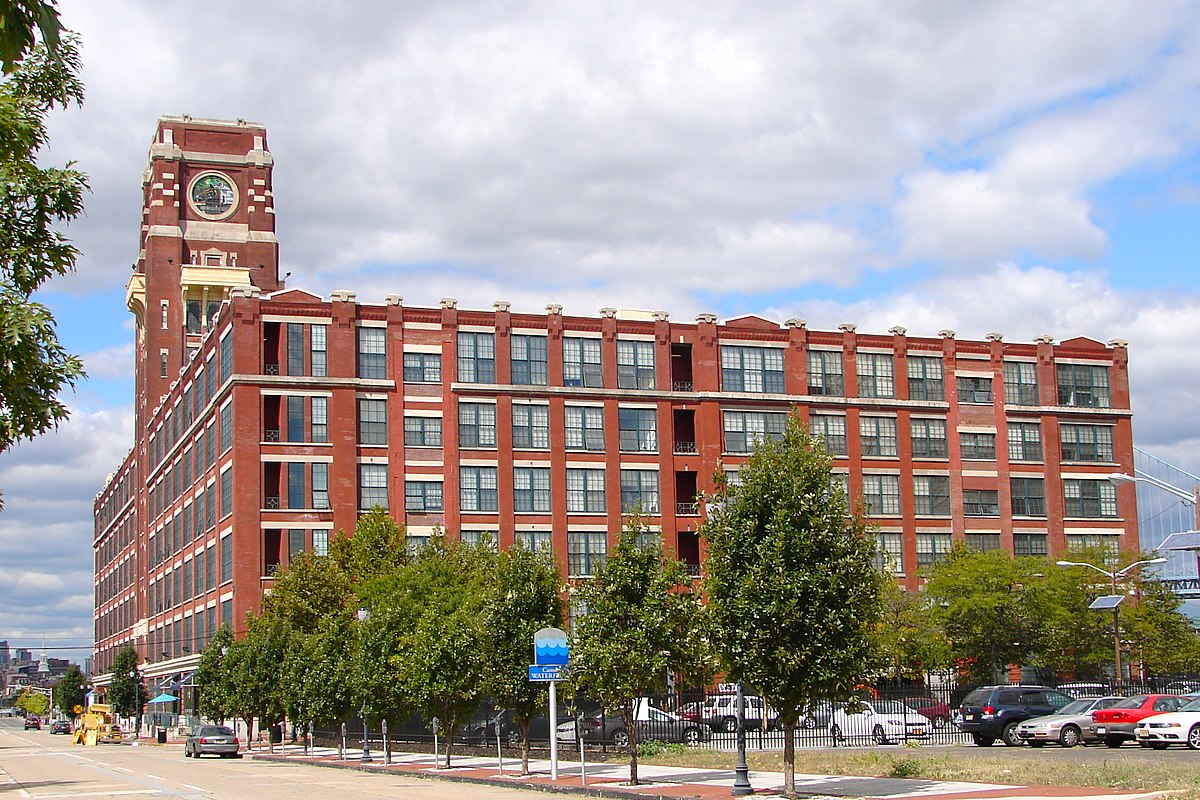

For a moment, Camden looked unstoppable.
A river city across from Philadelphia.
A manufacturing engine.
A place where America’s future was stamped, canned, and shipped.
From the outside, it looked like momentum.
It wasn’t.
This is Rest in Power—a series about power at its peak, the structures that held it up, and the forces that pulled it apart. Camden isn’t a person. It’s something more revealing: a system that worked perfectly—until it didn’t.
The Setup: When Camden Made the Country
Camden’s rise wasn’t accidental. It was engineered.
By the early 20th century, the city sat at the intersection of:
- deep-water shipping on the Delaware,
- rail lines feeding the Northeast,
- and factories that could scale faster than the workforce could grow.
The names were national:
- RCA Victor pressed records and built radios that defined American sound.
- Campbell Soup Company industrialized food and shipped it everywhere.
This wasn’t soft power.
It was payroll power.
Jobs stacked. Neighborhoods filled. Tax bases grew. Camden didn’t need branding—it had throughput.
The Assumption: Industry as Destiny
Camden made one bet, and made it loudly:
Manufacturing would stay.
The city planned around:
- factory employment,
- stable union labor,
- and the idea that proximity to markets mattered more than cost.
For decades, that assumption paid.
Then the math changed.
The Turn: When the Curve Bent
Postwar America didn’t kill Camden overnight. It hollowed it out.
One by one:
- factories automated,
- production moved south or overseas,
- logistics outpaced geography,
- and corporate headquarters decoupled from shop floors.
The jobs went first.
Then the residents who could leave.
Then the tax base.
What remained were the fixed costs:
- infrastructure sized for a larger city,
- social services for a shrinking one,
- and blocks built for paychecks that no longer came.
The Collapse: Power Without Engines
By the 1970s and 1980s, the feedback loop turned vicious:
- fewer jobs → fewer residents,
- fewer residents → less revenue,
- less revenue → less service,
- less service → more exit.
Camden didn’t fail because of one decision.
It failed because everything was tied to the same engine.
When the engine stopped, there was no backup.
The Afterlife: Anchors Without Gravity
Camden never went silent. It went selective.
Campbell stayed—but automated and centralized.
Hospitals and universities expanded—but didn’t replace the old payroll scale.
Waterfront projects rose—but tourism doesn’t employ a city the way factories do.
The symbols survived.
The system didn’t.
The Autopsy: What Actually Killed Camden
1. Single-Industry Dependence
When manufacturing left, Camden had no second spine.
2. Fixed Urban Costs
Cities can’t downsize like companies. Streets, schools, and utilities don’t vanish with jobs.
3. Decoupled Corporate Power
Headquarters loyalty doesn’t equal employment loyalty.
4. Time
Once decline compounds, recovery isn’t a pivot—it’s a generational rebuild.
Rest in Power
Camden didn’t lack ambition.
It lacked redundancy.
This city powered a century of American life. Radios, food, wages, momentum. Then the current shifted—and Camden absorbed the shock for everyone else.
Rest in Power isn’t about mourning what was lost.
It’s about understanding what power demands to survive.
Camden rests in power not because it fell—
but because it shows what happens when scale outgrows resilience.
A city can build the nation.
If it doesn’t build a future beyond that role,
the nation moves on—
and the city becomes the lesson.
REST IN POWER
Stories of power, rise, collapse, and legacy—told without nostalgia.
 Bernard Van Houten
 Bernard Van Houten


Member discussion