
REST IN POWER Part IV: Atlantic City — The Jackpot That Became a Trap
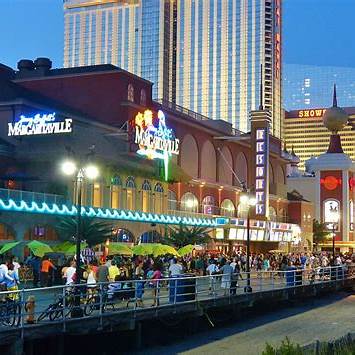
By The Garden State Gazette
For a minute, Atlantic City looked untouchable.
A boardwalk with national gravity.
A skyline of neon.
A legal monopoly on East Coast casino gambling.
A city that could print money with tourism and adrenaline.
From the outside, it looked like salvation on autopilot.
It wasn’t.
Rest in Power isn’t “rest in peace.” It’s what happens when power becomes a system—then the system turns on the place that depended on it.
The Setup: The Vote That Made a Kingdom
New Jersey didn’t accidentally create Atlantic City’s casino era. It voted it into existence.
In November 1976, New Jersey approved a referendum that limited casino gambling to Atlantic City, and in May 1978 Resorts International opened as the city’s first casino. Atlantic City Free Public Library
That one decision turned the Boardwalk into a machine:
- high-rise casino hotels,
- nonstop tourism,
- and a payroll that carried neighborhoods.
At its peak, the casino economy delivered nearly 43,000 jobs and record revenue of about $5.2B (2006). Encyclopedia of Greater Philadelphia
Atlantic City didn’t just get a comeback.
It got a throne.
The Assumption: A Monopoly Is Forever
Here was the bet—quiet, total, and fatal:
If we’re the only game in town, the money never stops.
So the city grew around casino gravity:
- taxes, public budgets, and local jobs tied to gaming
- businesses built for weekend crowds
- a civic identity that became inseparable from the industry
Atlantic City didn’t diversify. It scaled the one thing that worked.
The Turn: When the Region Opened Competing Tables
Then the monopoly dissolved—not by law changing in New Jersey, but by other states building their own casino ecosystems.
Once nearby alternatives expanded, Atlantic City faced a brutal reality:
- the same weekend gambler now had closer options
- the same tourist dollars didn’t stretch as far
- the same casinos still had massive fixed costs
Even major outlets tracked the gap between the peak and the slide—revenue that once hit $5.2B fell dramatically by the mid-2010s. CBS News
The money didn’t vanish overnight.
It just stopped being guaranteed.
2014: The Year the Illusion Broke in Public
Atlantic City’s breaking moment wasn’t theoretical. It was a calendar.
In 2014, a wave of closures hit—Showboat, Revel, Trump Plaza (and others in that era), creating thousands of job losses and a citywide shock that couldn’t be spun as “temporary.” WHYY
This is what “Rest in Power” looks like at the city level:
- empty towers
- broken routines
- a workforce built for a machine that just shut off
Later, the Trump Taj Mahal closure in 2016 became another symbol—thousands more jobs gone, another major property added to the pile of “former giants.” TIME
The Afterlife: Reinvention, Reinvestment, and the Same Old Problem
Atlantic City didn’t die. It adjusted.
The state and institutions pushed redevelopment through entities like the Casino Reinvestment Development Authority (CRDA), designed to leverage casino-linked revenues into projects and improvements—clean & safe, tourism district planning, venues like Boardwalk Hall, and broader reinvestment efforts. NJ CRDA+1
That’s real work. Real infrastructure.
But reinvention runs into the same hard rule:
You can’t replace peak casino payroll with “vibes,” conventions, and weekend spikes.
A visitor economy is a tide.
A city needs an engine.
The Autopsy: What Actually Broke Atlantic City
1) The One-Industry Trap
Casinos didn’t supplement the economy—they became it. Encyclopedia of Greater Philadelphia
2) Monopoly Addiction
The model depended on exclusivity. Once the region offered alternatives, Atlantic City’s edge dulled fast.
3) Fixed Costs Don’t Care
Casino towers, debt loads, staffing models, and city services don’t shrink gracefully when demand drops.
4) A Workforce Built for the Machine
When closures hit, the harm wasn’t abstract—it was concentrated, immediate, and local. WHYY+1
Rest in Power
Atlantic City’s tragedy isn’t that it gambled.
It’s that it won—and built an entire city around the win.
When the rules changed, Atlantic City discovered the real cost of being a symbol:
the Boardwalk can survive the downturn,
but the people living behind the lights absorb it.
You can build a city on a jackpot.
If you don’t build a second engine underneath it,
the jackpot becomes a trap—
and the city rests in power the way fallen empires do:
still standing, still famous, still haunted by its peak.


Member discussion